

If you’ve ever gone to take a hit and realized your bong looks (and smells) like a science experiment, you’re not alone. Most people bounce between overpriced, under-engineered “miracle” cleaners and DIY fixes like isopropyl alcohol and salt. The problem? A lot of companies treat bong cleaner like a quick cash grab, not a real chemistry problem—so you get one disappointing bottle and assume every solution is the same.
At Hygenix, we actually test this stuff: controlled resin load, timed soaks, standardized rinses. In this 2025 guide to the best bong cleaner, we’ll walk through why resin is so hard to remove, how we lab-tested the top 10 options, and how products like Shake to Shine, Simple Soak, and Aneu 99% ISO stack up against big names like Kryptonite, Formula 420, Randy’s, Pink Formula, Orange Chronic, Zep, and classic ISO + salt.
What You’ll Need (for a Proper Cleaner Test or Deep Clean)
You don’t have to recreate our lab process, but if you want pro-level results or to compare products yourself, here’s a solid setup:
-
Hytek Cleaning Caps – To seal joints and mouthpieces so you can shake without spilling
-
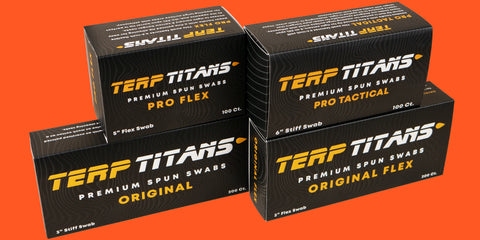
Terp Titans Swabs (Original) – Pointed + spiral tips for joints, bowls, and quartz inserts
-
Warm water for rinsing
-
Nitrile gloves + eye protection (especially if you ever experiment with non-cannabis-specific cleaners)
-
Timer + notepad/phone to track contact times, smell, and clarity
Why Choosing the Right Bong Cleaner Actually Matters
Resin, Tar, and Why Your Bong Looks Like Hazardous Waste
What’s stuck to your glass isn’t just “old flower”—it’s a mix of tar, ash, reclaim, and partially combusted organic material. Reclaimed resin is loaded with tar and combustion by-products, with relatively little desirable cannabinoids left.
That sticky layer:
-
Grabs onto glass with a mix of non-polar compounds (resins, tars, waxes) and carbonized gunk.
-
Holds onto smell because those resins cling to aromatic compounds.
-
Creates a fantastic bacterial playground once water sits in the bong for days, and if aerosolized can wreak havoc on your immune system.
Why Water Alone (and Weak Cleaners) Fail
Cannabinoids and many smoke by-products are poorly soluble in water—they’re mostly non-polar, so straight water or mild soap barely touches them.
So you need at least one of these chemistry levers:
-
Strong solvent (like high-purity isopropyl)
-
Smart surfactant system (detergents that emulsify non-polar gunk into water)
-
Mechanical action (abrasives, shaking, directed flow)
Most “meh” cleaners use a little of each, but not enough of anything. That’s how you end up shaking forever, rinsing eight times, and still seeing a brown film.
Material Safety & Why “Anything That Works” Isn’t a Strategy
Your bong is usually borosilicate glass and can handle heat and moderate pH, but add delicate and complex percolators, bake on labels and suddenly:
-
Harsh industrial degreasers (like some Zep products) are corrosive and designed for engines and concrete, not something you put your mouth on.
-
Some strong cleaners can strip decals or paint if they’re not properly baked into the glass.
The right bong cleaner has to balance:
Powerful resin removal + low residue + material safety + realistic contact time
How We Tested: Our Lab-Style Method for Ranking the Best Bong Cleaners
You can adapt this at home, but here’s the framework we’re writing this guide around.
Step 1: Standardized Dirty Pieces
-
Use similar borosilicate beaker bongs with multi-day “realistic” resin build-up.
-
Add a set amount of smoked material per test cycle so pieces are comparably dirty.
-
For certain products, we also tested on downstems, bowls, and hand pipes.
Step 2: Controlled Contact Time & Agitation
For each cleaner, we standardize:
-
Cleaner volume (e.g., 100-120 ml for a 13" Illadelph beaker)
-
Contact time (short contact for “instant” claims vs Soaking 1-3 hours)
-
Agitation
-
Shake-based products: same number and intensity of shakes
-
Soak-based products: no shaking, focus on time.
Step 3: Rinse, Dry, Score
After cleaning:
-
Rinse with warm water until no visible bubbles or slickness(residual film creating haziness).
-
Air dry and examine under consistent light.
-
Score on:
-
Resin removal (visual clarity)
-
Smell reduction
-
Residual film / squeakiness
-
Time + effort required
-
Material compatibility (no fogging, no damage, no decal lift)
The rankings below reflect this process.
Top Bong Cleaners in 2025: Product-by-Product Breakdown
1. Aneu Shake to Shine (Hygenix) – Best Overall / Fastest for Heavy Resin
Type: Terpene-powered, science-backed solution for a premium shake cleaner.
Use case: Dirty daily drivers, multi-chamber percs, ideal for borosilicate. Works well with silicone, metal, and ceramic. Do not use plastics and painted items.
Why it stands out (and obviously we’re biased, but we also did the work):
-
Built specifically to break resin apart at the molecular level, not just blast it with brute-force solvent. Makes resins water soluble so they are easily rinsed away and do not adhere to surfaces like sinks and pipes.
-
Meant to clean fast without boiling water or harsh industrial chemicals. Making the cleaning process easier, and less likely to cause damage to your piece.
-
Designed around real use: shake, rinse, done—so you’re more likely to actually keep your glass clean instead of dreading the chore.
Where it shines:
-
Heavy resin on glass and silicone
-
People who hate multi-step routines
-
Great for bringing neglected tubes back to life
-
Built in dosing nozzle so you can shake the bottle while it is upside down.
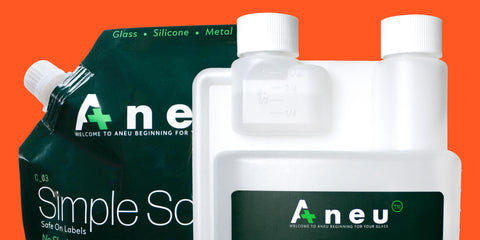
2. Aneu Simple Soak (Hygenix) – Best for Deep Soaks & Delicate Geometry
Type: Soak-only cleaner
Use case: Works best for accessories like slides, bowls, hand pipes and soaking tubes for stain removal or simply if you are not comfortable aggressively shaking your pieces.
Key benefits:
-
Built for low-effort, high-depth cleaning—you let chemistry do the work.
-
Great for people who want to drop a slide or bowl piece in a container of simple soak, walk away, and when you return simply rinse the item and you’re done.
-
Ideal when you’re worried about shaking fragile glass or knocking around a pricey heady piece.
3. Aneu ISO 99% (Hygenix) – Best Precision Cleaner for Quartz & Atomizers
Type: 99% isopropyl alcohol in a purpose-built bottle
Use case: Quartz bangers, Puffco-style atomizers, small glass pearls and pretty much anything concentrate related.
Why high-purity ISO matters:
-
99% ISO gives you more actual solvent and less water, so it dissolves resin faster than 70% solutions. In reality 1.41x stronger, meaning 99% is over 40% stronger than 70% isopropyl alcohol.
-
Perfect paired with Terp Titans swabs for routine, surgical-level cleaning.
Limitations:
-
Isopropyl alcohol has no emulsifier, so while it dissolves resins and waxes, it doesn’t prevent them from redepositing if the solution becomes saturated. This is why glass can develop a cloudy film when ISO is reused too many times or isn’t rinsed afterward—there’s simply more residue in the liquid than it can continue to hold.
-
However, when the alcohol is replaced regularly, the dissolved resins stay well below the solution’s solubility limit, and the surface will dry clean and clear with no film left behind.
-
Highly flammable – must be stored and used with standard flammable-liquid safety in mind.
4. KLEAR™ Kryptonite – Clay-Based, No Alcohol / No Salt Option
Type: Clay-based, non-alcohol glass and bong cleaner.
Highlights from manufacturer & community:
-
Designed to coat instead of shake—a “don’t shake, coat” positioning.
-
Clay component encapsulates tars and resins so they rinse away instead of just smearing.
-
Marketed as non-toxic and salt-free, which some users like for decal safety and lower scratching risk.
Where it’s strong:
-
People who dislike harsh fumes
-
Overnight soaks where you don’t want abrasives bouncing around
-
Users explicitly seeking a non-alcohol, non-acetone cleaner
5. Formula 420 – Fast Abrasive Action for Glass, But Watch Surfaces
Type: Liquid with abrasive action + surfactants; “1-minute cleaner” branding.
Use case: Dirty daily drivers, multi-chamber percs, ideal for borosilicate. Works well with silicone, metal, and ceramic. Do not use plastics and painted items.
What’s notable:
-
Marketed as a complete 1-minute cleaner for glass, metal, and ceramic.
-
Uses a combo of detergents, chelators, and alkaline builders, and is generally ipa based.
-
Strong alkaline systems can be tough on decals, paint, and some finishes if misused or left on too long.
-
Abrasive tech is powerful, but you don’t want to blast delicate glass or quartz constantly.
6. Randy’s Black Label – Extremely Fast, Very Strong Resin Attacker
Type: Powerful proprietary acetone based resin-fighting formula.
Use case: Dirty daily drivers, multi-chamber percs, ideal for borosilicate. Works well with silicone, metal, and ceramic. Do not use plastics and painted items.
What the brand and community say:
-
Branded as a “lightning fast” solution that attacks heavy resin buildup with minimal scrubbing.
-
Many users report 30–60 second clean times for moderately dirty pieces and swear off ISO afterward.
-
Strong smell, best to use in a well ventilated area.
Important caveats:
-
The manufacturer explicitly says it should not be used on silicone or plastic, only on glass (and sometimes ceramic/metal, depending on SKU)
-
Power comes with responsibility: you really want gloves here and thorough rinsing.
7. Pink Formula – Salt-Forward “Shake” Cleaner
There are a couple of “pink”-branded cleaners in the wild; the one often discussed for glass uses Himalayan pink salt plus a liquid base to create a shake-style cleaner.
Use case: Dirty daily drivers, multi-chamber percs, ideal for borosilicate. Works well with silicone, metal, and ceramic. Do not use plastics and painted items.
General pattern:
-
Relies heavily on abrasive salt + solvent/detergent mix.
-
Very familiar experience if you’re coming from ISO + salt, but in a branded bottle.
Good for:
-
Users who like the feel of abrasives doing visible work
-
Simpler percs and straight tubes where you’re not terrified of scratching interior bends
8. Orange Chronic – Citrus-Scented, “Immediate Results” Glass Cleaner
Type: Citrus-style liquid cleaner with abrasives
Use case: Dirty daily drivers, multi-chamber percs, ideal for borosilicate. Works well with silicone, metal, and ceramic. Do not use plastics and painted items.
Brand promises:
-
Immediate results, no scrubbing or waiting
-
No aftertaste or residual smell, “earth friendly”, free-rinsing, and brightens glass and metal.
Use cases:
-
People who prioritize fast results and nicer smell over deep chemistry explanations
-
Good for regular maintenance on glass and some metal components
9. Zep Industrial Purple Degreaser – Industrial Cleaner People Hack for Bongs (Not Recommended)
Some creators and forums hype Zep (or Zep citrus degreasers) as a cheap hack for bong cleaning.
Reality check from the SDS:
-
Zep Industrial Purple is a Category 1 skin and eye corrosive, with sodium hydroxide and other heavy-duty components designed for engine parts, shop floors, and unfinished concrete.
-
Safety data explicitly warns about burns and serious irritation, and some versions are not intended for food or dietary environments.
-
Lowe’s listing even notes one version: “Don’t use on glass or windows.”
Could it strip resin? Of course.
Would we recommend it for something you inhale through, where residue and microscopic pitting matter? No. There are too many purpose-built options that don’t carry that hazard profile.
10. ISO + Salt – The Classic DIY Benchmark
Type: DIY combo – 91–99% ISO + coarse salt
Use case: Dirty daily drivers, multi-chamber percs, ideal for borosilicate. Works well with silicone, metal, and ceramic. Do not use plastics and painted items.
Pros:
-
Cheap, easy to source, and genuinely effective when:
-
You use high-percentage ISO
-
You clean often
-
You shake aggressively enough to get the salt scrubbing everywhere
-
Flexible: you can use it on bowls, downstems, simple percs, and let it soak.
Cons:
-
No surfactants/emulsifiers, so dissolved resin can redeposit as a thin film unless you rinse meticulously and replace ISO often.
-
Over time, that film is what makes glass look permanently cloudy.
-
Easy to get lazy on rinse quality; ISO taste or smell in the piece is a real thing if you cut corners.
Common Mistakes to Avoid with Bong Cleaners
Here’s where most people go wrong (and where you can instantly leapfrog 90% of users):
-
Using 70% alcohol for heavy resin
-
Too much water, not enough solvent power; you waste time and still leave a film.
-
Soaking Puffco-style atomizers in harsh chemicals for hours
-
Aggressive cleaners or long soaks can damage seals, coatings, or adhesives. Safer play: short ISO soaks, swabs, and air dry per the device maker’s guidance.
-
Boiling water on glass
-
Rapid temperature swings can stress and crack borosilicate, especially with thin or china glass. It also ruins your pots and makes your house stink.
-
Scraping quartz with metal tools
-
You’ll leave micro-scratches that trap carbon and make future cleaning harder; stick with heat, ISO, and swabs.
-
Mixing random chemicals “for extra power”
-
Combining strong alkalis, acids, solvents, or industrial degreasers is a very bad idea, especially in enclosed spaces. Quite dangerous.
-
Leaving industrial cleaners like Zep as a regular routine
-
Even if the tube looks clean, you’re trading short-term shine for long-term material and health risk, with SDSs clearly flagging corrosivity and serious irritation.
Troubleshooting: When Your Piece Still Isn’t Perfect
Use this section to keep readers on the page and resolve real-world problems:
-
“My bong still smells after cleaning.”
-
Do a second pass focusing on the downstem, joint, and percs—those trap smell the longest.
-
Try a cleaner with stronger deodorizing/emulsifying chemistry (e.g., Simple Soak) and ensure at least one longer contact/soak cycle.
-
“The glass looks clean but feels slick or squeaky in patches.”
-
That’s likely residual film. Rinse with hot water longer and follow with a mild dish soap wash, then rinse again.
-
Consider rotating to a cleaner with better rinse-off profile and fewer heavy surfactants.
-
“My quartz still looks cloudy.”
-
If it’s been torched red-hot repeatedly, you may be seeing heat damage, not just residue.
-
For active residue, use Aneu ISO 99% + Terp Titans swabs while the banger is just warm, not blazing.
-
“My atomizer won’t hit even after cleaning.”
-
Check for flooding, damaged seals, or burnt-in residue on the heating element that no cleaner will fix.
-
Most manufacturers have strict guidance—staying within that is more important than exotic chemicals.
-
“I cleaned with something strong and now my decal looks faded.”
-
Some cleaners (including strong alkalis and certain solvents) can strip printed logos that aren’t baked into the glass. Next time, avoid prolonged soaks over painted areas or use gentler cleaners like Simple Soak on those sections.
How Often Should You Clean Your Bong in 2025?
A realistic maintenance schedule (assuming daily use):
-
Daily / Every Session (30–90 seconds)
-
Dump water, quick warm-water rinse.
-
For heavy users, a few ml of Aneu ISO 99% + a couple Terp Titans swabs on bowls and quartz.
-
Every 2–3 Days
-
Full clean with Shake to Shine (quick shake cycle) or another primary cleaner.
-
Rinse thoroughly; let air dry.
-
Weekly Deep Clean
-
For complex pieces, an overnight Simple Soak cycle.
-
Clean downstems, bowls, and accessories separately so they don’t “share” reclaim.
-
Atomizers & Quartz
-
Light maintenance after every use, in order to keep atomizers and quartz in good working condition. That’s where Aneu ISO 99% pays off—it’s cheap insurance against ruined hardware, and a single bottle will last a few weeks atleast.
The goal: make cleaning so fast and friction-free that it actually happens. That’s where the chemistry and product design matter more than marketing slogans.
Best Products to Use (Hygenix-Centric Recommended Cleaning Kit)
Here’s a simple comparison chart you can drop into the blog:
|
Use Case / “Best For” |
Top Choice (Hygenix) |
Backup / Alt (Non-Hygenix) |
|
Fastest full-bong clean |
Aneu Shake to Shine |
Formula 420, Randy’s Black Label |
|
Deep soak & percs |
Aneu Simple Soak |
KLEAR Kryptonite |
|
Quartz & atomizers |
Aneu ISO 99% + swabs |
High-purity ISO + Grocery Store Swabs |
|
Low smell, everyday use |
Shake to Shine |
Orange Chronic, Pink Formula |
|
Budget DIY baseline |
Aneu ISO 99% |
91% ISO + salt |
|
What to avoid long-term |
– |
Zep industrial degreasers (too harsh for inhalation gear) |
FAQ – Best Bong Cleaner in 2025
1. What is the best bong cleaner in 2025 overall?
For most people, a dedicated resin-breaking solution like Aneu Shake to Shine hits the best balance of speed, safety, and ease. Kryptonite, Formula 420, Randy’s, and Orange Chronic all perform well when used correctly, but they don’t solve the “I hate cleaning” habit problem as elegantly as a fast, low-friction routine.
2. Is ISO and salt still good enough, or do I need a branded bong cleaner?
ISO + salt absolutely works—but only if you use high-percentage ISO, clean often, and rinse very thoroughly. Over time, lack of surfactants means resin can redeposit as a haze. Dedicated cleaners and chemist-designed formulas aim to fix exactly that tradeoff.
3. Are industrial degreasers like Zep safe for bongs?
They’re designed for machinery, floors, and engine parts, not something you inhale through. SDS sheets show corrosive, high-pH systems that can damage skin, eyes, and potentially your glass over time. We don’t recommend them when there are purpose-built cannabis glass cleaners available.
4. What’s the safest way to clean a Puffco-style atomizer?
Usually: short ISO contact + swabs + proper drying, following the device maker’s manual. Avoid long soaks in harsh cleaners other than isopropyl alcohol or aggressive scraping—it’s not just about cleanliness; it’s about preserving coils, seals, and coatings. So it may also be a good idea to avoid ultrasonic cleaning if you plan to keep that atomizer in good condition for a long time.
5. How often should I replace my bong if I clean it regularly?
If you’re cleaning with glass-safe chemistry, avoiding boiling water and metal scraping, a good borosilicate bong can last decades. Most people replace it because they’re bored or broke it—not because chemistry wore it out.
6. Does a cleaner really affect flavor that much?
Yes. Old resin is packed with tar and combustion by-products that absolutely ruin terpene expression. A good cleaner + a consistent routine is the difference between “burnt bong water” and actually tasting your flower or concentrates.
Conclusion
Picking the best bong cleaner in 2025 isn’t just about which bottle melts resin the fastest—it’s about how well the chemistry fits your routine, your glass, and your standards for health and taste. When cleaners are under-engineered, consumers assume they’re all the same and give up. When chemistry is done right, cleaning becomes so quick and predictable that it actually happens.
If you want a routine that feels effortless instead of annoying, build your kit around Shake to Shine, Simple Soak, and Aneu ISO 99%, then use everything else in this guide as context, not a crutch.
Next step:
Dial in your personal routine and discover the fastest cleaning rhythm you’ll actually stick to with Shake to Shine.